Our mission
Information first, so no veteran has to guess
Veterans Project educates veterans living with PTSD and other service-related conditions, and older adults on long-term pain medicine, about medicinal cannabis options and about the secondary effects of opioids — so they can ask better questions of their own doctors.
Our artwork
Positive therapy, supervised dosification
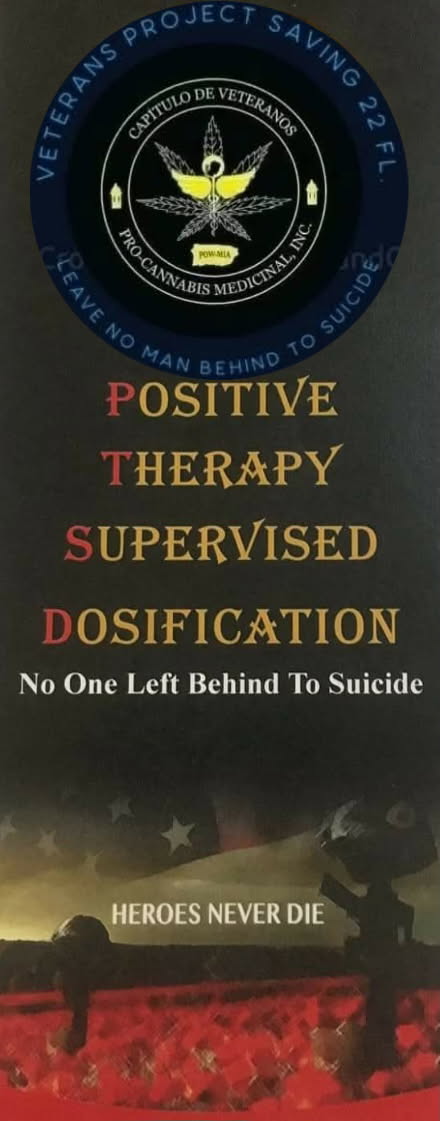
This is the piece we carry with us to outreaches. The words on it are ours, and they are the whole of our position: no one left behind to suicide.
The silhouette at the bottom, the poppy field, the marker — heroes never die. We put it on a banner because a banner starts conversations that a pamphlet does not.
No One Left Behind To Suicide.
Veterans Project publishes general education. Nothing here is medical advice, a diagnosis, or a recommendation to start or stop any treatment, and nothing here replaces your own doctor, who knows your history and can examine you.
Why we exist
We started with veterans we know. Men and women who were hurt in the service of this country, who were prescribed opioids for real injuries, and who took them exactly as directed.
For a while it worked. Then it stopped. The dose went up, the pain came back worse, sleep fell apart, and the answer to every complaint was another prescription. Nobody sat them down and explained what was happening to their body, or that the medicine itself could be making the pain worse. Nobody gave them a list of questions to take to the next appointment.
So they stopped talking about it. Some of them quietly started looking for something else, and a lot of what they found was being sold to them.
That is the gap we were built to close. Not with a product, and not with a claim — with information, in plain language, from people who are not selling anything.
Who we serve
- Veterans of any era living with PTSD, chronic pain, traumatic brain injury, or the long tail of both.
- Older adults who have been on pain medicine for years and were never told what it does over time.
- Family members and caregivers who are trying to help and keep getting told to wait.
- The people who work with them — peer counselors, clergy, social workers, and clinic staff who need something plain to hand over.
What we believe
The person is the expert on their own life
A clinician knows medicine. You know what your mornings are like, what you can still do, and what you have quietly given up. Both kinds of knowledge are needed.
Plain words are not a simplification
If a treatment cannot be explained without jargon, it has not been understood well enough by the person explaining it. We write for someone who is tired.
Honesty about uncertainty protects people
The research on cannabis is thinner than the internet suggests, in both directions. Saying so is not being against it. It is what lets someone make a real decision.
Nobody should be sold hope
There is an industry making money from veterans who are desperate for relief. We take nothing from it, and we say plainly when something is not known.
What we are, and what we are not
We are
- A nonprofit education and advocacy organization.
- Free to read, with no advertising and nothing for sale.
- Written in plain language, for veterans and families first.
- Independent of any cannabis company, dispensary, or clinic.
We are not
- A medical provider, and we do not diagnose or treat anyone.
- A dispensary, a brand, or a seller of any product.
- A law firm or a claims agent. We point you to real ones.
- A replacement for your own doctor or your VA care team.
A note on the emblem
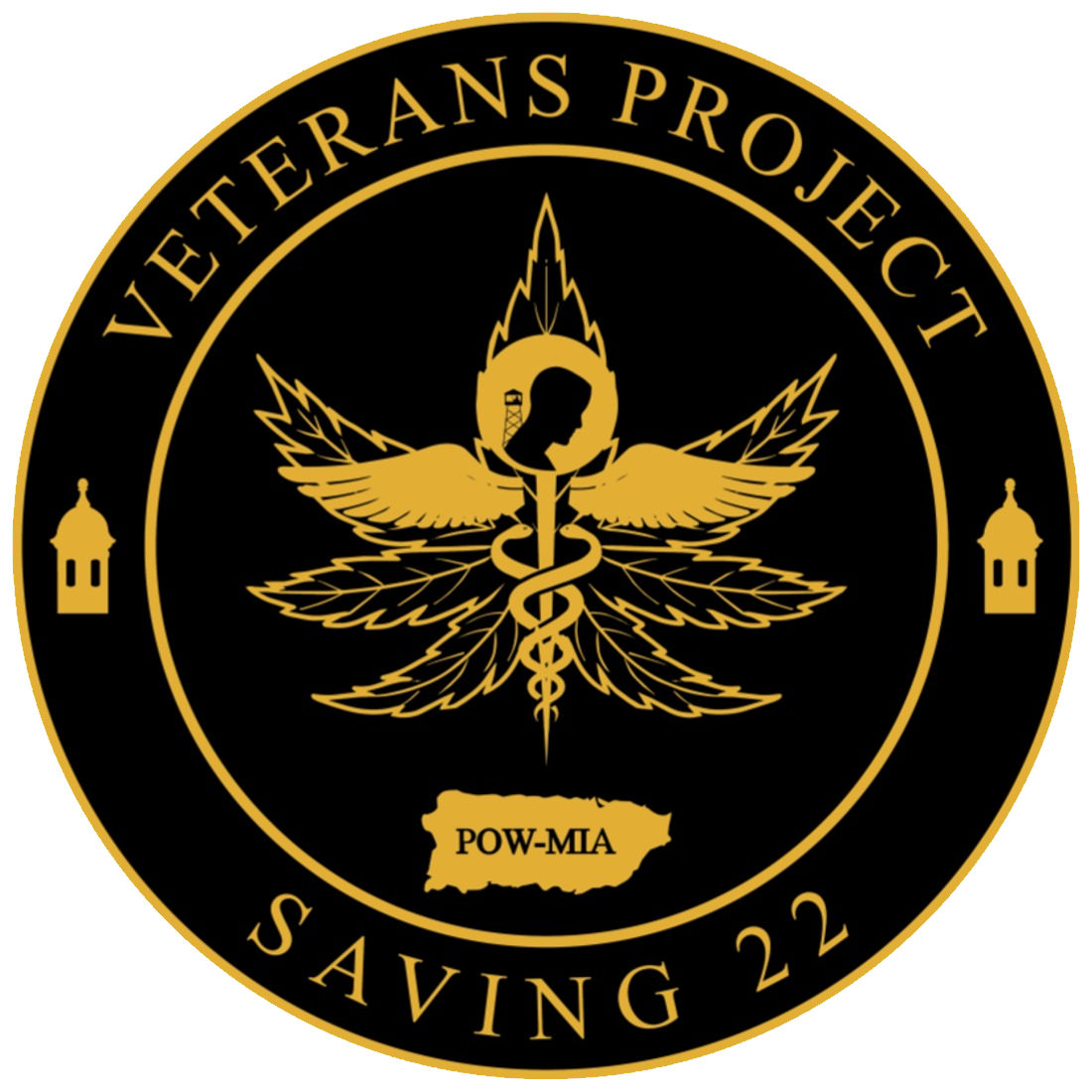
Our badge carries the wings, the flame, the profile, the medical caduceus, and the POW-MIA banner — and across the bottom, the words Saving 22. Those words are a commitment, not a campaign. The number has been used for years to count veterans lost to suicide each day, and it has been revised more than once; we keep it because the work of saving even one person is the whole reason this organization exists.
Prefer to call? We can be reached at (352) 709-3004.
Outreach
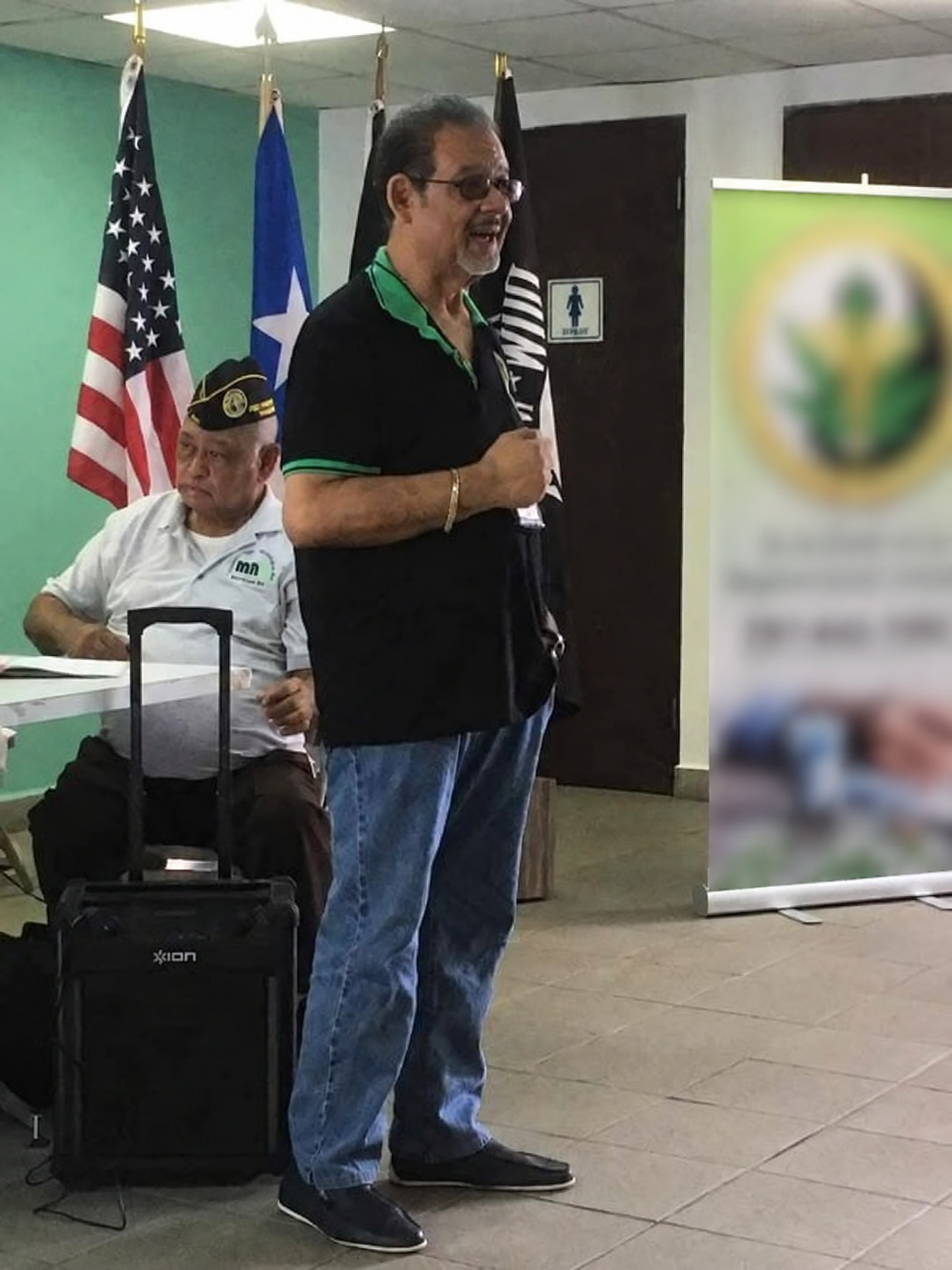
Out in the community
We present — at community education events, at posts, at gatherings where somebody is finally willing to ask the question out loud. It is plain talk, with no product on the table.